
Published in Splice Today. Part of the series on Long-term Unemployment
http://www.splicetoday.com/writing/how-it-happens-from-management-to-homeless
Random Rambling
Published in Splice Today. Part of the series on Long-term Unemployment
http://www.splicetoday.com/writing/how-it-happens-from-management-to-homeless

“Before you assume, learn the facts. Before you criticize, understand why. Before you hurt someone, feel…”(paraphrase, Kalifa)
When I read this quote it really resonated with me. Too often people make assumptions without knowing the facts. From these assumptions, they build stories that become the foundation of their perceived truths. They criticize and build walls of defense against an illusion, sometimes entering a battle to protect and right a wrong, starting a fruitless war that in the end causes pain for everyone involved.
Recently, I’ve seen someone slowly alienated and closed out from his group of friends. An assumption was made, without any background information or questioning, and what began as lighthearted teasing, grew into bitterness and resentment. He’s been falsley labeled, and the trust between friends has disintegrated. He knows they are missing important information, facts that totally reframe the situation, and yet he cannot and will not share them because that would require sharing information that is not his to share. His only way back into the fold is to betray a friend, to tell a confidence. So he has remained silent and alone; an unseen hero.
I’ve also been the brunt of such judgement and faulty perception. The attacks are as shocking as unmerited. I wonder what would change if they took the time to know the truth? Would they still expect the same things if they understood it was unethical? Do they place more emphasis on emotion than morality, on friendship above honor? Does a lack of information justify lack of character?
Knowing people react from a place of ignorance does not ease the sting of judgment and hypocrisy. It’s difficult to recover from the pain; the damage is multi-layered and scarring.
I learned at an early age not to react in a moment of pain or passion. Knee jerk reactions are rarely productive; words spoken without thought and examination more often than not bear rotten fruit. That’s frustrating for some people; they want to argue it out, to prove they’re right. I’d rather step away from the emotions and rest in the peace of truth. After all, you can find peace with a painful truth, but can only shadow-box a delusion.
For now, I’m going to leave the stones on the ground and strive to love.

“She can’t be that bad off,” he says. “Look how heavy she is.”
It’s just another head-to-desk moment in the face of ignorance. Such words do not reflect reason or rationality, much less wisdom.
Let me start with a disclaimer: I am not on food stamps, nor do I receive any subsidies, TANF support or temporary crisis relief from the government or any affiliates. I have, however written grants for a food bank organization that provided me as a “thank you” two months of the standard monthly food supply box they issue program participants. I have also volunteered with several organizations, packing said boxes and preparing fresh food (I use the term loosely – no, in fact I use it in error) for the needy. Since my current job involves cooking for the less fortunate, and part of my pay includes the food prepared, I have a unique perspective
As I hear such comments it only reveals to me the level of ignorance pervasive in our society.
Let me tell you the contents of my last food box:
• 1 – 2.5 lb. Bag Chicken Nuggets (Fully cooked processed meat for your convenience)
• 1 – 5 lb. Bag Potato Wedges (So you always have a starch)
• 1 – 8” Frozen Pizza
• 1 – Bag Totinos Pizza Rolls (For your quick lunch needs)
• 1 – Box Spaghetti (In a brand unknown to man)
• 1 – Can Spaghetti Sauce (A Mexican brand for authenticity)
• 2 – Can Cream Style Corn (Additional cream in your starchy vegetable is a must)
• 2 – Can Green Beans (with 413 mg Sodium, for added supplementation)
• 1 – Bag of Onions (1 rotten in the bag)
• 1 – Jar Peanut Butter (Likely made from the shells and not the peanuts)
• 3 – Boxes of Cream Cheese (Frozen, and therefore adequately separated)
• 1 – Bag Powdered Donuts (For a healthy breakfast alternative)
• 6 – Croissants (only hardened on the corners)
• 6 – Bagels (Rock hard and ready for weapons)
• 1 – 12-Pack Hot Dogs (A value brand with more chemicals than rejected meat parts)
• 1 – Frozen Apple Pie (With more apple filling than apple)
• 1 – Box Fig Square bars (An experiment on the Fig Newton)
• 4 – Bars of Soap (unboxed and loose in the bag)
• 1 – Can Pork and Beans (Van Kamp is to be commended at this point)
• 1 – Bag White Rice (Good Choice)
• 1 – Bag Dried Pinto Beans (Another good choice)
Now, in reviewing this list there are two very accurate statements to be made: 1. This amount of food will really help a hungry family and is a blessing, and 2. The contents of this box contributes to weight gain, diabetes, high cholesterol and an overall lethargic state of health.
Now, if you fall far enough below the poverty line, you can also get an EBT card as part of the SNAP (Supplemental Nutrition Assistance Program). This will allow you to purchase breads, cereals, fruits, vegetables, meats, fish, poultry and dairy products at the grocery store. That certainly helps balance the scales (no pun intended) a bit; except in reality the amount on the EBT card when applied to current grocery store pricing results in really only a week’s worth of “healthy” food supplementation. And, if you are even 5 dollars above that set poverty line, you do not qualify for the card, and therefore will be dependent on the content of the box alone.
I’m not knocking the Food Banks and Charity organizations that are so graciously providing food for the community. Not at all. They are a Godsend and are doing amazing work. These food boxes mean Americans who have fallen into adversity are not going hungry. This cannot be disputed. I’m only speaking against the judgmental attitudes of those who make ignorant attacks against the unfortunate, making statements that are counterproductive to the system and to any steps toward improvement.
It’s no secret the United States is known for their unhealthy food choices and lifestyle. Even the richest in our country fall victim to the processed and fast food epidemic. But a family in poverty, dependent on the provisions of charity and subsidy programs, without the choices available to most, the quest for health is close to futile.
I have travelled a lot throughout the years, and every time I am out of the country for more than a week, I can count on losing 8-10 pounds at a minimum solely based on the surrounding food philosophies. This isn’t just me talking, either. It’s a reported fact that the American way of processed, chemically manufactured and hormone-supported food is counterproductive to health and weight management. With obesity directly tied to these issues, is it any surprise the group without choice would fall privy to this issue?
I can tell you, I’ve never seen a food drive that produced organic donations. The possibility for fresh produce is non-existent simply based on the procedures within the system, and frozen vegetables are a rare donation since the average American family depends on them to meet their food pyramid demands. Additionally, real meat products are more seasonal than standard. On special occasions, such as Easter, Thanksgiving and Easter, a special meat will be provided in a food box, such as a small ham, a whole chicken or a roast. These generous gifts are from grocers who have overstocked for the special occasion and certainly not reflective of a scheduled supply.
The weight of a person is no indication of need. Can’t you see the problem?
Before you pass judgments on the true need of the less fortunate, why not think about the facts and do the math as you eat your second organic muffin and drink your grande macchiato?
My friend Max Weiss said I should blog about the long-term unemployed experience.
Who’d want to read about that dreadful, depressing journey? And why would anyone dealing with the day-to-day struggle want to spend even more time in the drudgery talking about it?
“It’s relevant, timely, and insightful; it challenges the narrow-minded thinking of the right wing. And it could be cathartic.”
She’s a magazine editor. Surely she knows.
Have you heard? The long-term unemployed are lazy, lacking drive and motivation, and entitlement programs discourage recipients from finding work.
This week, I applied for the following positions:
(4) Facilities Manager
(2) Project Manager
(1) Administrative Facilities Support
(1) Non-profit
(1) Teaching (TESOL)
For those of you who haven’t had the pleasure of completing online applications, correcting erroneously populated data fields, taking mandatory tests, personalizing the cover letters, and completing questionnaires specific to the company and job, the process is much longer than simply forwarding your resume.
Additionally, I signed up with an International Recruiting Company for opportunities in the US and abroad, resubmitted my Peace Corp application, signed up for the Foreign Services testing in June and worked on ramping up my LinkedIn Profile.
I spent two hours in a mandatory debt counseling class before I could talk with a lawyer about the bullying I have received from my mortgage company. After determining I had cut back expenses in my life more than most people, and had actually come up with quite creative ways to reduce costs, they forwarded me to another organization. I spent another two hours going through their process. I then spent an hour compiling the paperwork they requested.
In an effort to make a little extra money, I trained two people in a software program, created a database, pitched an article idea to a newspaper and a magazine, and sold a sketch. This was in between the time I caulked and painted around the top of the chimney, mowed the lawn, provided a statement to an insurance company regarding an accident I witnessed, assisted a stranded motorist in getting her car to the garage, completed two modules in a French course, participated in a conference call on networking in the FM industry, and had my car repaired when the gasket leaked.
Of course, this is all above and beyond the time spent doing laundry, cooking, cleaning, attending small group, and the other day-to-day responsibilities so often taken for granted.
I’ve been considered long-term unemployed for two years now, and yes, clearly I’m lazy (spoken with abundant sarcasm).
Here’s the thing. I’m busy trying to rebuild my life in a system that is blocking my every move. I’m engaged in a war that most people only peripherally know is being waged much less understand what it’s like on the front lines. Perhaps if people would put away their judgments and preconceived notions and actually do the work involved to understand what’s happening, they wouldn’t make such unmerited, foolish statements. But stepping outside your comfort zone takes work; it demands time, patience and attention. It’s a challenge, and more often than not the results of enlightenment are a whole lot of disappointment and hurt. It’s much easier to sit in the lap of luxury and call the less fortunate lazy.
Cheers! May you never face adversity.
They tell you to be honest when addressing gaps in your resume. Specific to caregiving, explain to the hiring manager why you made the decision, and assure them that the necessity has ended.
People are confused by caregiving. They see it as a noble effort; they respect you for the decision. They even admire the character that drove you to such selflessness. Sadly, many people still see themselves placing their parents in senior-living homes because the responsibility seems just too impossible.
In the end however, most hiring managers still see the justifiable gap in your work history as a negative. Being out the workforce for a long period has resulted in irrelevance, even if you’ve maintained certifications, taken courses and worked to stay abreast on industry news. It’s as if people see the caregiving experience as inconsequential.
It’s clear there is a general ignorance surrounding the work and skills involved in caregiving.
* Scheduling (multiple doctors, PT & OT, medicine)
* Biohazard clean-up and control
* Insurance negotiation
* Accounting
* Research
* Advocacy
* Professional corresponeance and reporting
These are transferable skills that are fundamental to any number of jobs and careers. So many people don’t seem to understand it goes beyond holding hands and providing emotional support, though I’d be lying if I didn’t admit this was the most meaningful aspect for me.
I can talk about the experience and the skills I developed during my time as a caregiver. I can use them in my day-to-day life; I can advise others. I can feel confident that I have grown and developed both personally and professionally. I can also watch people sit with eyes wide in shock and horror as I detail the battles, celebrate victories and acknowledge lessons learned. None of that matters as much to me as the memory of my mother’s hand caressing my cheek and thanking me for loving her so much.
I became long-term unemployed during my time as a caregiver. I have been penalized ever since.
The prejudice and stereotype surrounding the long-term unemployed is humiliating. It undermines who you are, diminishes your value and significance, and attempts to discredit the very real and valid experiences that brought you to this place. The real shame is on a system that places more importance on a resume timeline above character, a professional title above heart and perseverance, and experience at a corporate task above experience on the front lines of a battlefield. And make no mistake, caregiving and patient advocacy is a war. I hope you are never drafted.
There comes a time when you have to start looking for jobs in areas that may not be your so-called area of expertise. I actually reached that point long, long ago, but today I had an interview that placed a spotlight on yet another level of insanity in the job search.
The interview was for a Customer Service Representative.
The job description explains the position would be in a call center environment, responding to new requests, complaints and service orders from established accounts. Systems furniture experience a plus.
I come from a Facilities Management background. For those of you who don’t know what that means, I have explained this further in a previous blog: http://wp.me/p3HHLR-7M. Relevant to this current job opportunity, I have been the person employees call when something environmental is preventing them from being functional and productive in their positions.
For the general “worker bee,” a colloquialism often used to describe the staff you find in support areas (such as the mail room, copy center or reception desk) and in the sea of standard cubicles, the requests would involve a wide range of issues. Fedex didn’t pick-up the packages, there’s no diet coke in the vending machine, there’s a foul odor coming from the drain in the restroom, the flourescent light is flickering, a power outlet doesn’t work, the cube isn’t set-up for a left-handed person, the copy machine is jammed, the keyboard tray is causing carpel tunnel syndrome, someone cooked fish in the microwave and the smell is causing mass nausea, the courier stole my honey bun…
Middle manager calls are geared a little differently. Their calls sound more like this:
* My team needs to be seated in the same cubicle cluster so they can effectively brainstorm
* We don’t have a departmental printer
* Our system needs UPS backup
* The A/V system in the conference room doesn’t work
* There aren’t enough filing cabinets
* It’s always cold
* It’s always hot
* Why don’t we have a bigger breakroom?
Then there are the executive calls. Mission critical resources need to have generator back-up, what are the disaster recovery plans, our competitor has Kate Spade chins, raised flooring is required, the caterer needs a serving area, the flower arrangement in the lobby is hideous, I’d rather have a cheery wood desk, someone is stinking up the executive restroom…
Yes, clearly the Facilities Manager job involves a great deal of customer service. Since it also involves space planning and the build-out of cubicle spaces using systems furniture, I’d be a great fit for this position. Right?
“I don’t see your Customer Service positions on your resume.”
There’s a reason the “experts” tell you to go with a functional resume when applying for jobs involving transferable skills rather than title matching for the position. It’s so you can see the actual “customer service” that has been performed. You can see the skill at work.
I point out the Customer Service section outlining this specific experience and my career successes.
“But you haven’t actually been a Customer Service specialist.”
I discuss how Facilities Management is by definition a customer service specialist, regaling him with a few stories of customer service scenarios and the aligning procedures. We talk about difficult situations and positive outcomes. We discuss systems furniture, the job specific requests and how I would approach the customer. He is clearly impressed.
Or is he?
“We’re looking for someone who’s been an actual Customer Service Specialist.”
Ummm…Forty minutes into this interview and it’s become clear experience isn’t as important as title.
Note to self: Next time don’t waste time on that “functional resume.” Just be creative with the job titles; it involves less editing since the experience remains the same. And if they call to check references, don’t worry about the lie. You can always say they did a re-org and the position titles changed. After all, what’s in a title? A title by any name is still the same.
And to the college kid who had Customer Service Specialist experience from his fast food service days and therefore got the job, but now has no idea how to handle the customer who just went ballistic because her ped drawer locked on its own and she can’t get to her cell phone: Congratulations.
Give it up! For Lent, that is…
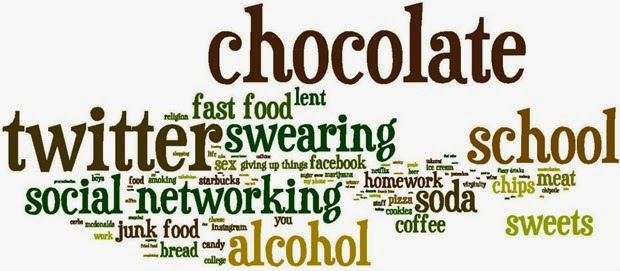
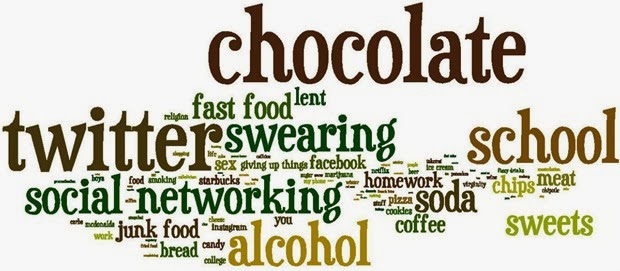
Giving up something for Lent seems to have become more of a trend, a step to receiving the “I did it” badge, rather than an actual journey in spiritual life. A Twitter search reveals some of the most popular items to fast at Lent include chocolate, fast food, sodas, and even Twitter itself. One of my friends suggested she was giving up Hugh Laurie for Lent, a joke of course, and yet it occurs to me that is very reflective of the current attitude and approach to what is meant to be a profound experience in your spiritual life.
 The purpose of Lent is not the fasting itself, not the act of refraining from something you enjoy. Neither is it some kind of a contemporary sacrifice of modern comfort so that we can experience a piece of Christ’s suffering now. Technically, there is no need to do that according to the Bible, for Christ’s sacrifice is already all-sufficient. No one can add or subtract from it. That is why Jesus said just before his death, “It is finished.” His work of grace and salvation was finished at the cross. The purpose of fasting is to disentangle ourselves from things that easily hinder us from our pursuit of Christ. Just as Jesus fasted in the wilderness to find strength in his walk with God even in physical weakness, we fast to focus on our walk with Him. Jesus gave up the necessities: food and water. We give up comforts and perks in life that distract us and pull our focus from Him. Hebrews 12:1 suggests, the giving up of things during Lent is a way of throwing off what “hinders,” so that we can run the race set before us.
We have somehow made Lent the race, and even reduced it to mini-sprints as we use the feast of Sabbath as a cheat. (“Sunday is coming, I can have a coke!”) Somewhere along the way someone decided there was a contradiction in the ideologies of Lent and the feast of Sabbath, so they created a way to incorporate them both into an acceptable seasonal ritual. What they actually managed to do is create another distraction. How many people now are fasting during the week with their eyes on the relief of their day to cheat? They focus on denying themselves their Lent sacrifice, finding comfort in the cheat to come, and totally miss the point.
Lent is a time of walking with Jesus, of talking to God the Father, and of sensing the moving of the Holy Spirit in our midst. It is not the taking away of something we have. It is the putting on of something we do not yet have. It is a time of shifting our focus from the repetitive and habitual tasks and experiences of day-to-day life, creating a seasonal awareness to remove the blinders so we can see the bigger picture of the resurrection of hope. The fasting IS a celebration. We don’t need to hang on to the weekly Sabbath Sunday celebration at the expense of the celebration that breaks from the ordinary things and catapults us into an intimate walk with our God. The irony in having a cheat day during Lent is it reveals we have become enslaved to religious tradition as much as our coffee, sodas and social media. Lent is meant to be counter-cultural – in weakness we find strength, in emptiness we are filled – just as the Sermon on the Mount suggested. There’s an intentional shift away from worldly perspectives to a heavenly one.
It occurs to me Lent is meant to be a break from mundane thoughts and concerns to remind believers they are not just wanderers, but on a path to spiritual maturity. The “doing” of spiritual disciplines is not as important as cultivating that relationship. The most fatal sacrifice believers can make is looking for cheats in this journey. I think next season I’m going to try for something new. I’m not going to give up Lent for Lent.

I read an article today that is part of a series on “The Art of Living.”
“Whilst stranded in a temple with a friend for ten days on account of rainy weather,” it began and then recounted how Chin Shengt”an, a 17th century Chinese playwright, counted the truly happy moments of his life. He defined these moments as those time “when the spirit is inextricably tied up with the senses.”
I was fascinated by his list. It consisted of a variety of memories that were mere minutes in his life. He would share that memory and simply ask “is this not happiness?”
The memories were moments that many people would miss, and certainly wouldn’t term “happy.” Most would disregard them as insignificant if they took the time to digest the moment at all. Chin’s approach to happiness is so different from what we have typically been taught or come to understand. Not one moment on his list involved a wish being granted, or a prayer answered, or even a goal achieved. His moments of happiness involved surprising moments when the “unexpected” met the needs of the spirit that hadn’t even been acknowledged until it was suddenly satisfied. He savored the simplicity of the moments and defined them as “happy.”
It made me think about moments in my life when the spirit and sense were one, when hidden needs and desires were unexpectedly met. I wanted to take a few minutes to make a similar list, to acknowledge and reflect.
* It was hot. The sweat no longer glistened on my skin, but now beaded into droplets that slid over my body and weighed down my clothes. I was tired, and helpless to fight off the affects of the sun. When I stopped to take a deep breath and move the hair from my neck, a breeze began to gently stir the air. I could here it moving in the grass and trees, stealthily coming toward me. The air was no longer stagnant, but a cool whisper to sooth me. Is this not happiness?
* I am laying on the back porch, connecting dots in the sky to create new constellations. Is this not happiness?
* As I walk along the beach, the tide pushes the water across my feet and I am shaken for a moment, until the sand washes beneath me and my stand becomes grounded. I know I’ll be okay. Is this not happiness?
* During a ten hour road trip, three friends share the laughter that can only come from vulnerability, transparency and acceptance. Is this not happiness?
* My nephew introduced me to his friend by saying “This is the light of my life.” Is this not happiness?
* At a party, the host pointed out that the pot on the back of the stove contained my spaghetti sauce: it didn’t have mushrooms. She remembered I am allergic and considered me. Is this not happiness?
* While canoeing down the Buffalo River, my friend stands like a gondolier and begins singing a nonsense song about Italian food. Is this not happiness?
* The wind in my hair during a sunset cruise, when the pink and oranges that illuminate the darkening sky and clears a cloudy mind. Is this not happiness?
He had her head on his shoulder, his hand gently caressing her arm as he spoke softly to her.
She’s had a stroke and is now in a wheel chair. She has a limited ability to talk and struggles to sit up straight in the chair.
He comes every day to sit with her. He tells her stories, describes her surroundings and reminisces about their years together.
I watched as he gently ran his fingers along her forearm, encouraging her to rest her head on his shoulder. “You know I’ve always loved when you lean on me,” he whispered. She was struggling to respond, but managed to mumble an apology.
His eyes filled with tears as he held her. He told her not to be sorry. “You’re my love,” he said. “There’s nowhere else I’d rather be than by your side.”
I couldn’t stop the tears from rolling down my face as he began quoting their marriage vows. “For richer or poorer, in sickness and in health, in good times and in bad times…”
There’s nothing so beautiful to me as a love like this between a man and a woman. There’s nothing so profound as seeing that covenant in action, that commitment honored, that love embraced.
What comfort must it be to know you’re not alone facing the horror and pain as your body betrays you. How precious a gift to know you can walk the unknown path holding the hand of your love, to face the darkness with your life-long partner.
When facing the realities of life and aging, it’s impossible to pretend that love doesn’t matter.
A recent article in the Atlantic reported on a study that examined the callback rates to interviews for a set of fake resumes where the only major difference was the duration the candidate had been unemployed. The results weren’t surprising, and yet they do reflect a prejudice that may be setting up a snowball effect for future economic challenges, or at the very least a slower economic recovery. It seems the biggest predictor of employment success for the job seeker is the length of time since your last job. The invisible line of demarcation? Six months.
It’s not as if this concept hasn’t been around for years. Explaining and underplaying these “gaps” is taught in almost every unemployment class and by recruiters and other advisors everywhere. But in a time when economic crisis has pushed so many people beyond that six-month line is this a realistic demand for a hiring manager? Has this ideology become a prejudice that doesn’t only hurt job seekers, but the overall economic employment structure?
There are currently an estimated 4.6 million long-term unemployed in the United States, and 66% of those have been unemployed for over a year. Did you process that?
To be counted as one of the long-term unemployed, an individual needs to have been out of the workforce for 6 months or more, be immediately available to start a job, and be actively pursuing employment. Actively pursuing employment means sending out resumes, manually completing applications, interviewing or engaging in some activity that has the potential of actually gaining employment; simply searching job boards does not qualify as actively pursuing. There are 4.6 million people who meet the criteria, and according to many analysts that number is grossly underestimated. Sixty-six percent, over 3 million of the “long-term unemployed,” have more than doubled the industry accepted amount of time to still be a viable candidate for employment. Do you see the problem here?
These numbers increase monthly. As new jobs open up, those people newly unemployed get the interviews, which logically results in the long-term unemployed continuing to be, well, unemployed and increasingly less viable. Just to put numbers to this mayhem: 7.6% of the working-age population is unemployed and 40% of those have already reached the long-term unemployed status. Every month those numbers increase as the number of new jobs reported are taken by the newly unemployed and the 3% of the working age population who are currently unemployed face a well-documented prejudice that will prevent them from obtaining employment.
Many analysts have started estimating the number of people dropping out of the workplace as a result of the long-term unemployed dilemma, and it is significant. These numbers include the people who have chosen to stay-at home and adapt to becoming a one-income family, the people (usually those in their early 20s) who chose to go back to school for additional degrees, and those baby boomers who took an earlier retirement, electing to live beneath the level they originally worked to achieve, as well as those who have just given up and those who continue to look but are now requiring welfare assistance. The result of this exodus: the number of people in the workplace currently equates with the number of people in the workplace in 1980. That means the population increased, industry expanded with a burgeoning of hiring opportunities, and the number of college graduates increased exponentially and yet the workforce is smaller. It also means there is a strain being placed on the system that weighs heavily against any job growth activity or economic initiatives.
It would seem some people are starting to think of the snowball effect beginning with continued foreclosures, reduced spending, and ending with an inadequate workforce as the jobs are created, but it doesn’t seem to be changing the attitudes in the workplace. Hiring managers are stuck in the mindset they had during a good economy, not only regarding the 6-month demarcation, but also the notion that those long-term unemployed have not done their due diligence in remaining relevant to their industry. The number of people seeking new certifications, joining networking groups, attending conferences, new trends/regulation downloads, etc. has remained the same even though the workforce has reduced. How do you account for that if not for the unemployed staying firm in their goals and agendas?
There needs to be a paradigm shift, a real change in the ideologies and approaches to hiring. The government initiatives for job growth are primarily geared toward the blue collar sector. The stalemate is with the middle-management jobs and the white collar long-term unemployed who don’t have enough opportunities and aren’t considered for the few out there. Even if they choose to “go where the jobs are” they need to first get trained in the blue collar sector. They need training and certifications to work in the manufacturing and/or technical arenas that are opened. That requires months and sometimes up to two years of training. In the meantime, what do they do? There’s not much they can do at this point. They are caught in this Bermuda Triangle of a Long-term unemployment. I wonder how long they will be lost in a system that has not adapted to the current crisis before change happens.
 by G. Anne Bassett