Thin Blue Line

The apocalypse of Twitter is upon us.

That means nothing to you if you aren’t a part of the elite birds using this social media outlet, but for those of us who spend chunks of time building relationships in 140 characters or less, it spells pain, change and insanity.

Apparently the developers, with more time on their hands than good sense, came up with a “brilliant” idea to place a blue line in your home timeline to indicate a conversation is occurring between people you follow.  But wait!  That’s not all.  The first tweet in the conversation appears above the most recent reply.  The chronological order will help you follow the conversation and encourage more people to become involved. This idea reads well on paper, right?

In earlier versions, the user had to click the expand button to show the conversation.  How annoying!  They must have been inundated with complaints regarding such a burdensome process.  Now it’s much easier.  You can read the same post over and over and over and over again.  Because yes!  Every time a follower replies in a conversation, the first tweet is repeated!

Don’t dismay.  It does get easier if you walk away from the conversation.  Then when you return, you only have to read the original post once and follow the many responses to catch-up.  Oh, drat!  That defeats the purpose of encouraging participation though, doesn’t it?  Oh, and you may still have to click that blasted “expand” button because if you get more than 4 replies, that poor little blue line is broken into little dashes and the middle entries are hidden.

First reports suggests users are only unhappy with change,  the outrage regarding the “ugly pregnancy line” on Twitter is just a normal reaction to updates.  Unfortunately, they may be buried too deep in technology sand to see that users have massively peed on this stick and migrated to another platform.

The twits are crying in their nest on this sad day: “Please, take us back in time.  Don’t make us walk this Thin Blue Line.”

Have Some Halva

The first time I tasted Halva I thought I was eating flavored particle board.

It was in a gift box sent to me from a friend in Israel. I had no idea what it was. The writing on the box was in Hebrew and all my friend told me on her note was that it was a popular sweet treat in her country. I could see from the picture on the box, the individually wrapped squares came in three flavors: vanilla, almond and honey. I had no idea which one I would be sampling as I bit into the soft, slightly greasy square. I certainly was not prepared for the sawdust washing down my throat.

https://i0.wp.com/cdnlive.albawaba.com/sites/default/files/imagecache/slideshow_big/sites/default/files/im/Slide_Show/Easter_food_2012/Halva.jpg

I teased my family into trying this would-be delicacy, anticipating the sputtering and frowns, and laughing at their expressions. It became quite the joke.

But the joke was on me.

You see, Halva is a sweet, candylike confection of turkish origin with a flavor base of ground sesame seeds (Tahini) and honey. Other ingredients are added, such as the vanilla and almond,to produce a variety of flavor profiles. It’s the crystallization of the natural sugars that create the distinct texture. It’s a fascinating play on the palate. Though the texture at first seems to be a distraction, it soon becomes an accent to the burst of flavor packed in a small bite.

What you cannot anticipate is the addictive quality of such a simple candy.

My obsession started in the Jerusalem market when a vendor handed me a sample of his espresso halva.

Oh. My. Goodness.

A coffee bean melting in my mouth. I couldn’t get enough. It wasn’t surprising that I whipped out my shekles and bought a block. I nibbled as we walked the streets of Jerusalem, and a couple of days later when I landed in France, I was still nibbling. Yes. I was snacking on an Israeli sweet in France. The irony could not be missed.

By the time I got home, I only had enough to offer my family and friends a fingernail size sample before the dreaded day came when my box was empty.

I found a market near me that sold boxes of the individually packaged, manufactured squares, and although good they did not come near the wonder of the fresh halva of Israel. I was going through withdrawals. It was time for a radical move.

You guessed it. The pots came out.

Homemade Halva

Base
2 cups honey
1 1/2 cups tahini, well stirred to combine

Optional ingredients (Up to 2 cups of one of the following to taste)

Sliced Almonds
Peanuts
Cashews
Bourbon Glazed Pecans
Pistachios
Dried Fruits
Bits of chocolate
Marshmallow
Bits of your favorite cookie

Or Infuse one of the following flavors
Vanilla
Cocoa
Coffee
Green Tea
Cinnamon
Pumpkin

Directions

Heat honey on medium heat until your candy or instant-read thermometer reads 240˚ F, or indicates the “soft ball” stage of candy making. To confirm that you are at the “soft ball” stage, drop a bit of the honey into a cup of cold water. It should form a sticky and soft ball that flattens when removed from the water.

Have the tahini ready to heat in a separate small pot, and once the honey is at the appropriate temperature, set the honey aside and heat tahini to 120˚ F.

Add the warmed tahini to the honey and mix with a wooden spoon to combine. At first it will look separated but after a few minutes, the mixture will come together smoothly.

Add the optional ingredient, if using. Continue to mix until the mixture starts to stiffen, for a good 6-8 minutes. Pour mixture into a well-greased loaf pan, or into a greased cake pan with a removable bottom.

Let cool to room temperature and wrap tightly with plastic wrap. Leave in the refrigerator for up to 36 hours. This will allow the sugar crystals to form.

Invert to remove from pan and cut into pieces with a sharp knife.

To transform it from a candy to a dessert pastry, try glazing it with a complimentary icing.

It will keep for months in the refrigerator, tightly wrapped in plastic…that is if you don’t eat it all first!

Halva some…You’ll be addicted too.

More Than A Role

When did it become so acceptable for titles and roles to define us? In America, we have become so defined by what we do, who we are married to or who we birthed that it becomes inevitable to get sucked into a vortex of identity confusion at some point in our lives.  Unfortunately, it is often at a time when you most need your self-identity to cope with life transitions and trials that you find yourself in emotional jeopardy.

It’s so easy to do; we are almost programmed to think this way.  There’s certainly a place for this philosophy in guiding teenagers toward pursuing their strengths and interests as they move into adulthood, but the programming starts long before it becomes a planning and logistics tool.  It happens so quickly it almost appears there could be an innate tendency to blur self-identity lines.  We ask children as early as kindergarten “what do you want to be when you grow up?” They answer “policeman” or “ballerina”; some are already thinking of stardom or politics based on the media most prevalent in their homes.  But how often do we hear a child say “happy” or “brave” or “strong”?  Occasionally you’ll still hear one say “like my mom” or “like my dad,” but it’s a rare, and even then, if you try to go deeper into what that means, they will point out the career.

So, it’s not surprising as adults we become more immersed in the quagmire of career-identity confusion.  We begin to focus on the job, the money, the title, until soon thoughts about the job are always on our mind.  We consciously and unconsciously begin to value people and activities based on how they help our career.  Some of us will attempt to maintain a work-life balance, to maintain interests and relationships outside that invisible occupation line, but we often find it a struggle.  Somehow our energy is drained as our time and talent is wasted on anxiety and fears surrounding the job.  We give more to our work and have little left to give to ourselves and those we love.  Our relationships grow stale, we are left feeling empty and our world becomes very narrow. 

Sadly, a similar phenomenon is tied with marriage and parenthood.  When you become a couple, you seek to become “one” as you approach life with a solid front, soaking up the joys and fighting the battles together.  As you strive to become more selfless in giving to and understanding each other, in compromise and adaptation, it is easy to forget your needs and desires, to overlook the individuality that made your connection worthy of uniting in the first place.  Likewise, the nurture and care of children takes primary position and becomes a necessary forefront.  One day you realize you are known only as her mother, or his wife, and you wonder how the fun, interesting person you once were disappeared.

To be single, childless and unemployed is like the trifecta of doom.  Well intentioned people will attempt to guide you back into your rightful place as the fictional-self accepted by your social circle, which in itself becomes a shaming and belittling experience. I can’t tell you how often “helpful” people speak their expectations into my life without any knowledge or understanding of who I am or where I am coming from. 

Just today at the doctor’s office I was instructed on how to “put myself out there to find a mate.”  I have reached my forties.  I’ve been to college, had a successful career, been a part of church groups, experienced speed dating, tried and tested many online dating sites, participated in meet-up interest groups, and volunteered with charities.  I’ve taken art, dance and home improvement classes, joined wine, hiking and French clubs, and I’ve traveled the world, experiencing cultures from the inside and not as a tourist looking in with interest and enthusiasm.  The assumption that I haven’t found a spouse because I’m not out there living is as naive and oblivious as the idea I haven’t found a job because I’m not out there trying and following-up. 

I was asked the question of our lives: what do you do?  But when I answered “enjoy life,” she frowned in confusion. 

“No,” she immediately tried to clarify.  “What do you do for a living?”

“Laugh, love, seek adventure…”

 “You must have a great job.  Where do you work?”

“I’m unemployed.”

She was clearly confused, but it only took a second for her to begin advising on the job search.  Not once did she actually consider talking about how I enjoyed life, or asking what type of adventures I sought. 

The implications are clear:  if you’re not in one of the expected, identifying roles, you have nothing to offer – you’re lost and in need of rescue. 

My nephew has Asperger’s Syndrome. When asked what he wanted to do when he graduated, he responded “study to be a doctor, or sweep.”  This answer resulted in a lot of confusion and even more laughter, yet there’s something very authentic and real about this response.  One answer conformed to social expectations based on what he’d been taught, but the deeper part of him was more simplistic and perhaps more true to the longing in his heart.

“I like to sweep,” he said.  “It’s an easy task and I can think and create while I’m doing it.”

The authentic self is not defined by a job, function or a role.  It is the you that is at your absolute core, the amalgamation of all your skills, talents, wisdom and beliefs.  It is the you that is hungry for expression, but is often muzzled by the expectations and constraints of who you are “supposed” to be and do.

I have existed outside the expected roles for quite some time now.  I admit I have felt lost as I wandered through what felt like an endless wilderness.  I’ve looked for a spouse, sought to have a child and searched for a job with patience and endurance.  I’ve fought the good fight!  Yet, recently I have begun to realize the most difficult part of this journey is dealing with the bias, prejudice and – dare I say – pity from those around me.  I do feel the loss and disappointment, but it has become digestible, freeing even as I’ve been released from the burdens that once were badges of power and position. 

I’ve come to believe the path I’m on is more than just a detour; it is the real journey to me.  I’ve had the unique opportunity to view life from a totally different viewpoint and it’s from that perspective I not only survive the ups and downs, but embrace them as an adventure ride.  I’ve become almost fearless as I now respond “The question isn’t what I do, but what can’t I do?”

If you were stripped of your job and any ability to get another one, of your spouse and your children, who would you be?  Do you know?

The Herzliya Marina

The Herzliya Marina

The Herzliya marina was built in the 1980s at the initiative of mayor Eli Landau.  The complex includes the Arena shopping mall, a variety of restaurants overlooking the water, and a walking path along the docks stretching out to the Herzliya Light.

We explored the wealthy district, caught the tail end of a crafts festival along the way and stopped for nightcap.  But what I liked the most was the peaceful walk along the waters edge, the glow of the setting sun, the light breeze through my hair, and sharing it all with my friend.

(Click the link above for photos of The Herzliya Marina)

It’s Bastille Day…

Happy Bastille Day!

20120714_185941
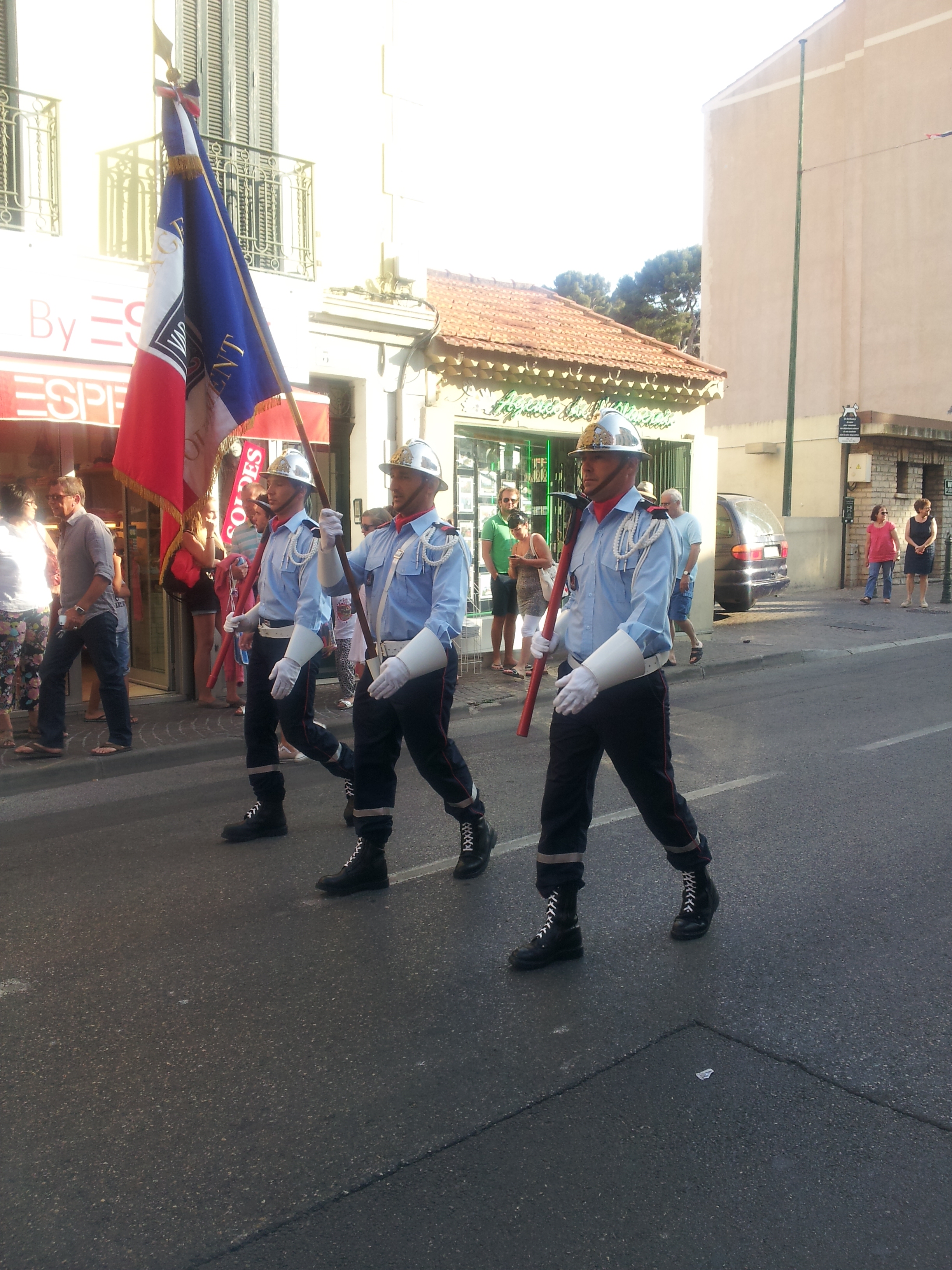
Bastille Day Parade in Sanary

July 14th is La Fête Nationale in France. While this is the date of the storming of the Bastille, the holiday is actually to commemorate the Fête de la Fédération. It is a symbol of the uprising of the modern nation and of the reconciliation of all the French inside the constitutional monarchy which preceded the First Republic during the French Revolution.

Last year I celebrated in Sanary, a commune situated east of Marseille in the department of Bouches-du-Rhone in the Provence-Alpes-Cote d’Azur region in southern France.

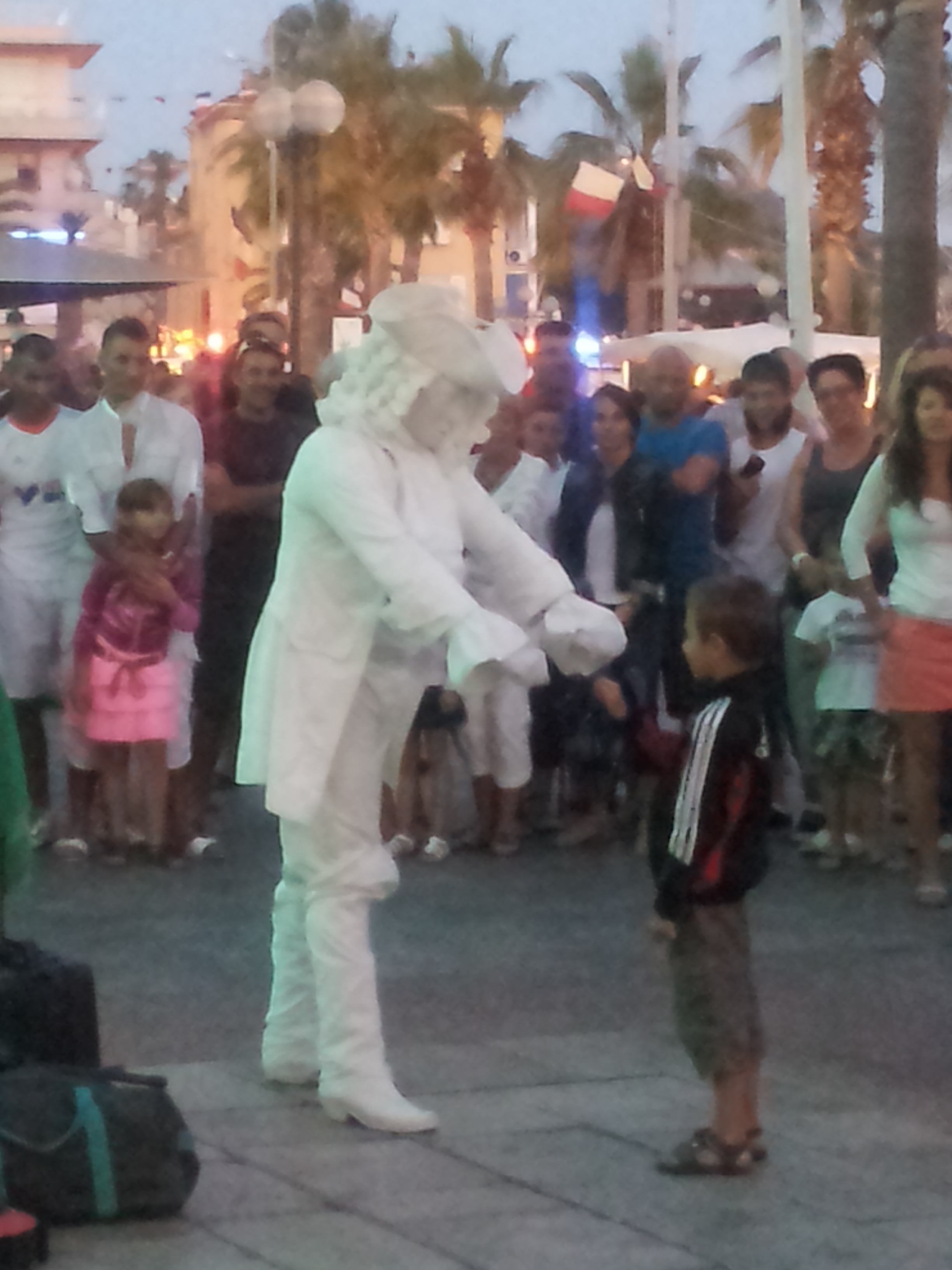
Street Performer
Street Performer

It’s a charming seaside community and fishing port. This area is famous for beautiful beaches, stunning views and boat tours to the Calanques, an area that features towering cliffs and dramatic inlets. We had taken one of those boat tours earlier in the day, but were now enjoying the festivities on the port.

The streets were lined with festival tents and booths where local craftsmen and artisans sold their wares, while performance artists entertained children and adults alike. We weaved through the crowds, checking out the special menus at the restaurants along the bay, until settling on a small pub near the place we had chosen for our fireworks viewing.

Picturesque Cassis
Picturesque Sanary

As the sun went down in the horizon, the parade of boats began. Sail boats, fishing boats and yachts, decorated with lights and ornaments, circled the harbor as patriotic music resounded through a centralized sound system. The crowds became thick in anticipation of the coming fireworks, but we found a semi-secluded spot on one of the docks.

The original celebration occurred on July 14th, 1790. The popular General Lafayette took his oath to the constitution, followed by King Louis XVI. After the end of this four day feast, people celebrated with wine, fireworks and running naked through the streets in order to display their great freedom.

The Fireworks of Bastille Day, 2012.

I kept my clothes on, but sat with my legs swinging free over the water and enjoyed a scoop of mango ice cream. The fireworks exploded against the picturesque landscape and festive port, and I was transported back in time to a child mesmerized by lights and sounds, free from worry, heartache and fear, free to be…and that is reason to celebrate.

Me’arat HaNetifim: The Stalactites Cave

Me'arat HaNetifim: The Stalactites Cave

The Stalactites Cave (Me’arat HaNetifim), also known as the Soreq Cave, is a carstic cave that is situated on the western slopes of the Judean Mountains, near the city of Bet Shemesh. The Stalactites Cave was created by the trickling of rain water that has dissolved the limestone, and it includes all existing stalactites formations, some of which have been dated as 300,000 years old at least. The cave’s sediments also create a variety of naturally occurring shapes. Many areas inside the Stalactites Cave are still active and the stalactites and stalagmites in it are still growing. The climb down into the Stalactites Cave goes through a 150 stairs and the views, as you can see, are magnificent.

Now Sparkling at Starbucks

“Your summer playground is here.”

Surprisingly, it’s not a pick-up line.  It’s the theme of the new Starbucks handcrafted soda line.  These are designed to be refresher beverages, fruit drinks made with real sugar (not corn syrup) and infused with carbonation.  I had the opportunity to sample many of the flavors today, and although I wasn’t transported into a past childhood playground – or drawn into an adult fantasy playground for that matter –  it was fascinating to taste what passed the development and marketing tests to make it into the stores.

The Bad

My first taste was not encouraging.  It was Lime and I immediately thought it would be better used as a palate cleanser than a refreshing beverage.  The Berry Hibiscus was only slightly better, but had the unique ability of being slightly addictive in spite of it’s questionable flavor.  The Root Beer could have been a Sassafras Tea gone bad: it may be more medicinal than tasty.

The Good

The Lemonade took me back to France, where Limonade is supreme (Now this is a playground I can appreciate).  But the best by far was the Orange.  I expected it to be a take-off on Orangina, but it was much more.  There was a burst of Mandarin Orange to make your taste buds spin.

Like so many of the Starbucks drinks, these refreshers are overpriced for what you get, so I’m not certain I’d set out to intentionally purchase one, but to cool down on a hot day these drinks are a viable option.  They definitely were not the bully on the playground, leaving you disappointed and betrayed, miserable in a time of fun, and yet I’d stick with the comfortable friends.  I’d rather pay a price for a satisfying flavor than a stomach elixir.

The Art of Living: Happiness

I read an article today that is part of a series on “The Art of Living.”

“Whilst stranded in a temple with a friend for ten days on account of rainy weather,” it began and then recounted how Chin Shengt”an, a 17th century Chinese playwright, counted the truly happy moments of his life. He defined these moments as those time “when the spirit is inextricably tied up with the senses.”

I was fascinated by his list. It consisted of a variety of memories that were mere minutes in his life. He would share that memory and simply ask “is this not happiness?”

The memories were moments that many people would miss, and certainly wouldn’t term “happy.” Most would disregard them as insignificant if they took the time to digest the moment at all. Chin’s approach to happiness is so different from what we have typically been taught or come to understand. Not one moment on his list involved a wish being granted, or a prayer answered, or even a goal achieved. His moments of happiness involved surprising moments when the “unexpected” met the needs of the spirit that hadn’t even been acknowledged until it was suddenly satisfied. He savored the simplicity of the moments and defined them as “happy.”

It made me think about moments in my life when the spirit and sense were one, when hidden needs and desires were unexpectedly met. I wanted to take a few minutes to make a similar list, to acknowledge and reflect.

* It was hot. The sweat no longer glistened on my skin, but now beaded into droplets that slid over my body and weighed down my clothes. I was tired, and helpless to fight off the affects of the sun. When I stopped to take a deep breath and move the hair from my neck, a breeze began to gently stir the air. I could here it moving in the grass and trees, stealthily coming toward me. The air was no longer stagnant, but a cool whisper to sooth me. Is this not happiness?
* I am laying on the back porch, connecting dots in the sky to create new constellations. Is this not happiness?
* As I walk along the beach, the tide pushes the water across my feet and I am shaken for a moment, until the sand washes beneath me and my stand becomes grounded. I know I’ll be okay. Is this not happiness?
* During a ten hour road trip, three friends share the laughter that can only come from vulnerability, transparency and acceptance. Is this not happiness?
* My nephew introduced me to his friend by saying “This is the light of my life.” Is this not happiness?
* At a party, the host pointed out that the pot on the back of the stove contained my spaghetti sauce: it didn’t have mushrooms. She remembered I am allergic and considered me. Is this not happiness?
* While canoeing down the Buffalo River, my friend stands like a gondolier and begins singing a nonsense song about Italian food. Is this not happiness?
* The wind in my hair during a sunset cruise, when the pink and oranges that illuminate the darkening sky and clears a cloudy mind. Is this not happiness?