“Practice.” It was the last thing I wanted to hear. I wanted to be told the secret to success, the tricks learned from experience and the shortcuts that make it easier. I wanted to be told what to do. Instead, I was directed to YouTube teaching and problem-solving videos; sentenced to figuring it out on my own. Alone. As usual. I’m always alone. I really should choose hobbies that are more social.
I looked down at the uneven stitches and twisted edges, the gaping holes in the pattern. I wasn’t completely certain some of the lines even held the correct stitch. My new stitches were disconnecting the previous, and each new row seemed to hopelessly alter the design. It was pathetic.
There had to be some way to make repairs, a way to stretch the yarn and pull it into place, a band that could frame the edge, an extra stitch that would fill the hole. But I didn’t know how to do any of that. I didn’t even know how I’d made the mistakes in the first place, much less how to correct them. I had to face a harsh reality. My limited knitting comprehension was holding me back, preventing me from consistently creating clean rows in even a basic pattern. How could I ever hope to repair the damage I had done? The problems I had created?
So, I unraveled what I had done.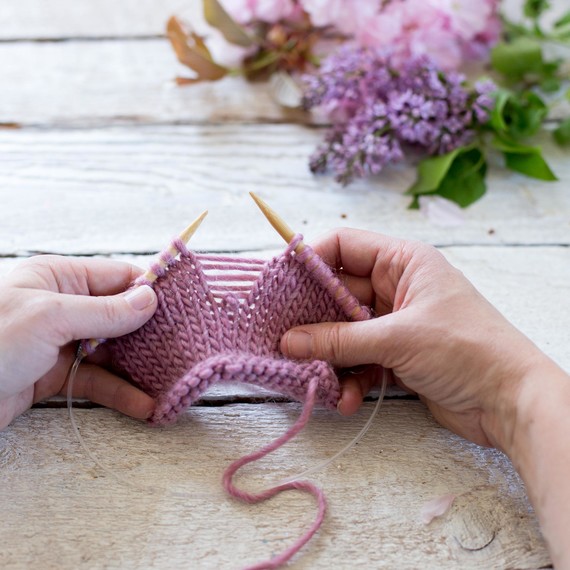
If only it were as easy to clean-up all the messes in life. If only a simple pull on the threads of delusion and self-importance that bind past decisions to a hopeful future removed the knots of guilt and regret that alter the present course. If only it were as simple as releasing the stitches of pain that have been weaved into joyful moments, irreparably altering beliefs and meaning.
There are countless books, movies and shows that explore this very idea: if you could go back in time, armed with the knowledge won from your mistakes, to create a new reality without experiencing those very mistakes, how would your life change? It never works out. Unraveling a flawed life is not so easy.
“Start again until you get it right.” My first real knitting advice.
I count the loops as I cast on with the same yarn and the same needle.
This is the time of year when our unrelenting desire to start anew is most evident. We spend weeks focusing on thankfulness and forgiveness, on love and kindness, on the importance of giving – not just gifts, but of ourselves – to family, friends and strangers alike. We unravel the bitterness and despair to begin counting our blessings. Then, we start the New Year with a resolve to be better. We make resolutions to have a better diet and exercise more. We determine not to be so quick to anger. We will volunteer more, save more, be more vigilant in taking steps toward our goals. We make resolutions that set ourselves up for failure. In a few days or weeks, we will sink back into the same eating habits, spend weekends binge-watching shows instead of exercising, hate our jobs, resent others and generally find reasons to build walls to keep others out.
Maybe peace is just a season.
The new stitches are a little more consistent, the edges are straight, but there’s another hole in my knit. I think I lost the pattern. Or maybe I held the yarn on the wrong side of the needle.
We are so ready to make a change, so anxious to make things right. If only we approach the problem from a different angle, if we make the opposite choice, everything will just fall into place. Or will it?
In fiction, when the hero goes back in time, the new path isn’t always a good one. He saved his wife but dies in her arms. She dates other people, but still ends up pregnant and marrying the same man on the rebound. He has a family now, but is too broke to pay for his kid’s cancer treatment. She’s rich, but alone. What is lost is never what is gained. Even when it does end up with a happy ending, someone else pays the price. She gets the guy, but the sister grows old alone and barren. He gets the contract, but the other guy is homeless.
There’s a new hole in what I’m working on. It’s a different stitch, but the pattern is still flawed.
This time I’m using larger needles and a bulkier yarn. It’s more difficult to cast on and I find myself concentrating harder on each stitch. The needles feel awkward and the yarn heavy. The entire process feels different even though I’m working on the same pattern. I struggle to find a rhythm.
I remember when my mother died, I was desperate to create a new life. It was the perfect time. I had been out of work for over a year as I cared for her. I wasn’t in a relationship. My family was spread out over the states. The friends nearby had lost connection and the friends that stuck around were far away. I could truly start with a fresh slate. A new job, new place, new friends. I could develop new habits and new skills. I could create a new life.
I pulled out memories and emotions, I grieved over loss and I cried at the scars that marred by heart. My Mother was gone, and with her my friend, my support, and my identity as a caregiver. I didn’t want to go back to my career. I couldn’t go back to pursuing my dreams. Time had been against me. I would never have the family I longed for. I had to mourn the children I’d lost and the children I would never have. I had to come to terms with that empty place where a partner should be. I had to release a lifelong dream, forgive and forget.
Unraveling a life is frustrating and painful, but it mostly comes as a relief. I could travel, and so I did. I could paint and write, hike and swim; I could pursue any interest or hobby I desired. I didn’t need to be bound by a pernicious mortgage, or a house once prepared to receive a family, but now full of empty and aging. I was no longer weighed down with family expectations and responsibilities. Everything was new, except for me.
The stitches were too tight. The yarn covered an abundance of issues; you could hardly see the flaws. But this fabric wouldn’t breath. It was thick and heavy, and I hated it. It may have its uses, but it wouldn’t serve its design.
There’s a knitting shop not far from where I live. It sells yarn and knitting supplies, but also has a knitting community. When I visited, there were eight women and one man seated around a table, each knitting their own separate project while talking about their lives. They were obviously close; the camaraderie was evident. I knew instantly they weren’t just a group with a common hobby, they were a group of friends working through issues in both knitting and life.
The manager of the store was welcoming, and when I explained I was learning to knit, he was very open with suggestions and advice. There are a lot of tips to be found on the internet, but having someone who has been through it tell you their story and work with you makes it easier. Maybe it just eases the frustration. Or maybe it helps to not be alone on the journey.
I was raised in the Christian church, and fully embraced that through Jesus, God was restoring what was lost. “Old things are passed away and all things are become new.” It wasn’t that sin no longer existed, or that we were no longer flawed. Evil still would be present in the world; man would still cause damage and be damaged. There would be pain and suffering, sickness and disease. But the birth of Jesus, his death and resurrection, that was the new path. There would be no need for rituals and sacrifices – for wrath and destruction – to bridge that gap between man and God. Nothing would separate us from His love. The twists and knots, the flaws and holes, were all unraveled and in a relationship with him, we could start new and create something beautiful.
There are other religions that explore similar concepts, and even atheists tend to seek this kind of change through history and science. The need to have a fresh start, to find the path to a more enriching life seems to be part of our DNA. We may go about it from different angles, but at the root there is always that drive to unravel it all and start again.
“It’s hard to believe you’ve been knitting for such a short time.”
I was puzzled by the words. I looked down to see where the stitches were loose, and the yarn twisted. I saw the flaws; she saw the art. As I began to look at it through her eyes, I realized how far I had come. The edges were straight, I had properly transitioned between stitches, and there were no holes in the pattern.
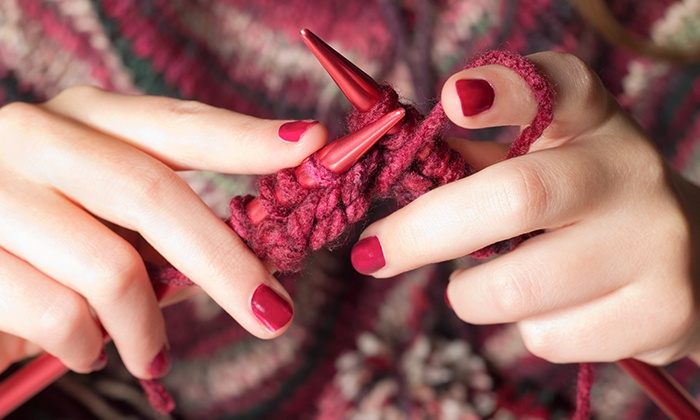 As I was knitting, I was able to feel when the yarn didn’t slide across the needles correctly and immediately realize I had the thread on the wrong side of the needle. I could discern when the stitch was too tight or too loose then adjust accordingly. I could feel the stretch before it became a ladder. All the practice hadn’t made my knitting perfect, but it had allowed me to learn to course-correct before too much damage was done.
Maybe that’s the point of unraveling. Whether you come back with the same tools and pattern or start with everything new, the journey will always truly begin with you. We can’t undo the past. Forgiveness doesn’t remove scars, time doesn’t fill empty hearts and new circumstances won’t change who we are inside. Real change is rarely about time or tide. It’s in our ability to adapt and adjust, to edit and modify as we walk along the path. It’s in our ability to find peace in the necessity to start again until we get it right.
I found a hole in my pattern. It was a mistake I quickly learned to fix.
It was in the practice. After all, you need to have a history to know the kind of help required.
It was in the question. Sometimes it takes more than reaching out to an expert and hoping they will help; sometimes you need to ask the right questions.
It was in relationship. Sometimes you need to find the people in your life who want to walk the journey with you.
It was in the experience. You need to be open and willing to share those fears and flaws knowing that all you really need is weaved in that blanket of mistakes.















 by G. Anne Bassett